Inflation and Retirement: Why Your Money Shrinks
A dollar today won't buy the same in 2045. Learn to account for inflation and protect your purchasing power to design a solid retirement in Quebec.
By Yeny Carias · Co-Founder
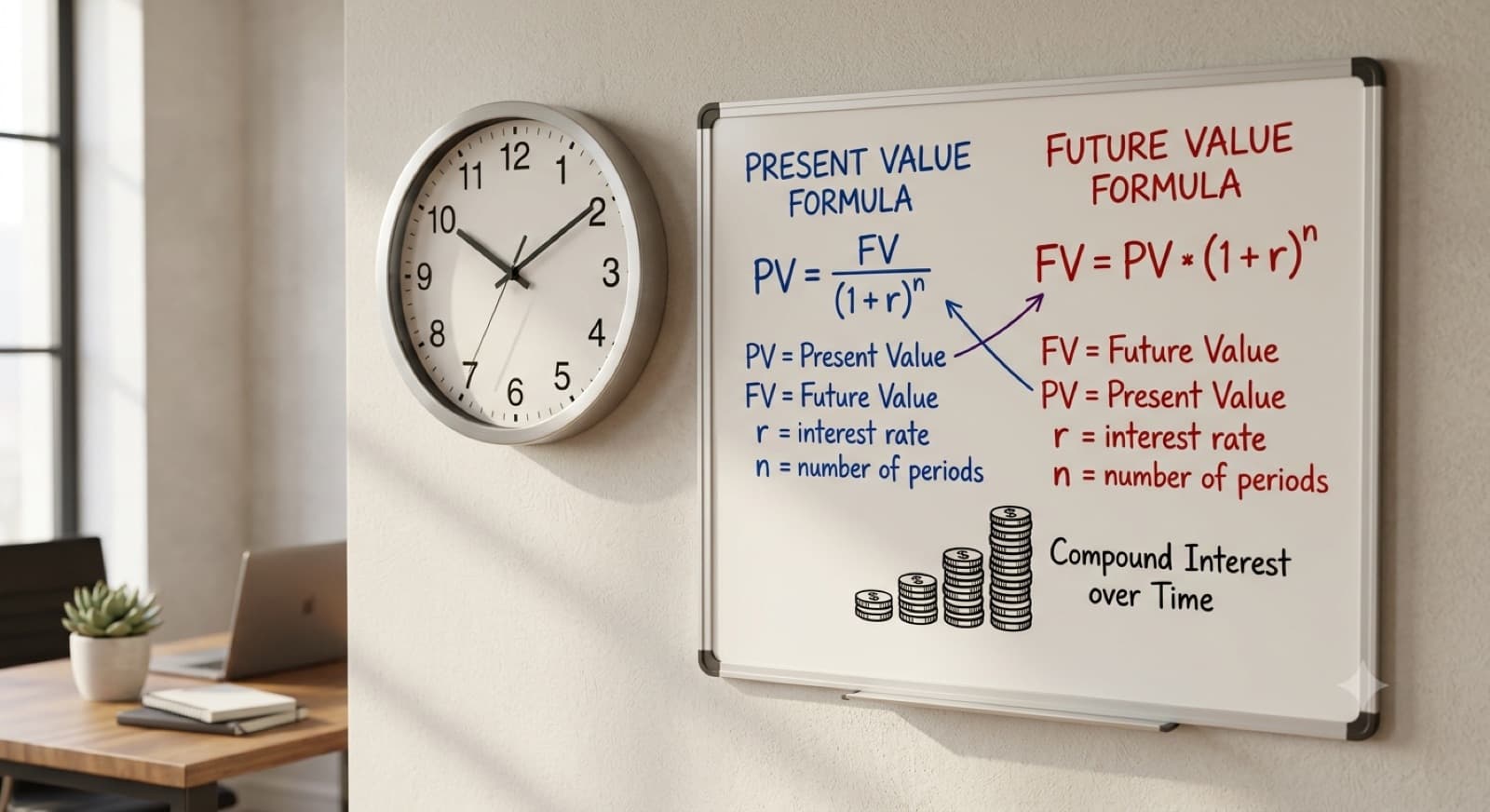
We work hard today so that our "future selves" can rest easy. But there is an invisible enemy that no one ever taught us to manage: the passage of time. The dollar you save today will not have the same value in 20 years, and understanding this is what separates those who live with anxiety from those who truly enjoy their retirement here in Quebec.
If you are dedicating your best years to saving for retirement, it is essential to ensure you are doing it right. When planning for retirement in this province, it isn't enough just to accumulate savings. You need to understand how your assets interact with the tax system and provincial pension plans, so that every year you worked translates into true purchasing power.
Have you ever stopped to think if you will be able to buy the same things with the money you'll have in retirement? The problem is that a dollar today does not buy the same as a dollar will in 2045.
What Exactly Is the Time Value of Money?
Simply put: a dollar today has more purchasing power than a dollar in 2045. This happens for three reasons:
- Inflation: The constant rise in prices that causes your money to lose "strength" over the years.
- Risk: The uncertainty of whether you will actually have that sum available in the future.
- Opportunity Cost: The growth you miss out on by not putting your money to work today.
As Albert Einstein said, "Compound interest is the eighth wonder of the world: he who understands it, earns it; he who doesn't, pays it." The younger you start, the greater the multiplier effect. This happens because the interest you earn today is reinvested to generate its own interest, creating a financial snowball.
However, to plan correctly, we must account for inflation. This is the only way to know what your money will truly be worth in the future.
Example: a 5% Return With 2% Inflation
Imagine Pierre is saving for his retirement and earns a 5% annual return. If inflation in Quebec is 2%, the prices at the grocery store will also rise by 2% each year.
To determine his actual growth in this example, we subtract the two values: 5% (Return) - 2% (Inflation) = 3% (Real Rate).
If Pierre doesn't make this adjustment, he will plan his retirement with a false sense of wealth. He will believe his money grows by 5% when, in the example, his purchasing power only rises by 3%.
"The Reality Filter": What Is Deflated Value?
We call this concept "the reality filter" because it helps us see what our money will actually buy in the future by cutting through the "noise" of inflation.
When you project 20 years into the future, the cumulative effect of inflation means that a million future dollars will not buy the same as a million dollars today. "Deflating" simply means adjusting that future figure to visualize your budget in today's dollars.
- Example: If your retirement fund will reach $100,000 in 20 years, assuming 2% inflation, its real value in today's dollars would be about $67,297. In other words, those $100,000 will buy the same amount of groceries or goods as $67,297 does today.
A good retirement plan should show you both worlds: the money you will see in your bank account (nominal value) and what you will actually be able to buy with it (deflated value).
What Is Indexed to Inflation in Quebec, and What Is Not
This calculation is vital in Quebec to avoid falling into the trap of "nominal illusion." While public pensions (like the QPP and OAS) are automatically indexed to inflation, many private savings plans are not.
This is why you should calculate the real value, not just the nominal balance, of assets such as your RRSPs (REER) and TFSAs (CELI). A simulation that ignores inflation is not optimistic; it is wrong.
How to Protect Your Purchasing Power
Money in retirement is not an end in itself; it is the means to maintain the quality of life you desire. Understanding how to preserve your purchasing power is the secret to designing a solid retirement, allowing you to work smarter and with much less effort.
Invest in your peace of mind: design the retirement you really want to live.
Want a plan that adapts to your life?
AuraPlan is in open beta — take the free assessment and see where your retirement plan stands.