RREGOP Pension Adjustment: What Box 52 Takes From Your RRSP
Why RREGOP members get so little new RRSP room, how Retraite Québec calculates the box 52 pension adjustment, and what to do about it in 2026.
By Jose Perdomo · Co-Founder
Stéphane is a patient attendant (préposé aux bénéficiaires) at a CHSLD, a public long-term care centre, in Sherbrooke, with 32 years of service in the RREGOP and a salary of $52,000 in 2026. Before tax season he does the math he knows: the RRSP lets you contribute 18% of the previous year's salary, so he expects about $9,360 of new room. His notice of assessment, which the CRA sends him after he files his return, will add only $3,876.
The missing $5,484 appears in box 52 of his T4, under a name that doesn't explain much: the pension adjustment (PA), or facteur d'équivalence in French. It's what his RREGOP pension already saved for him that year.
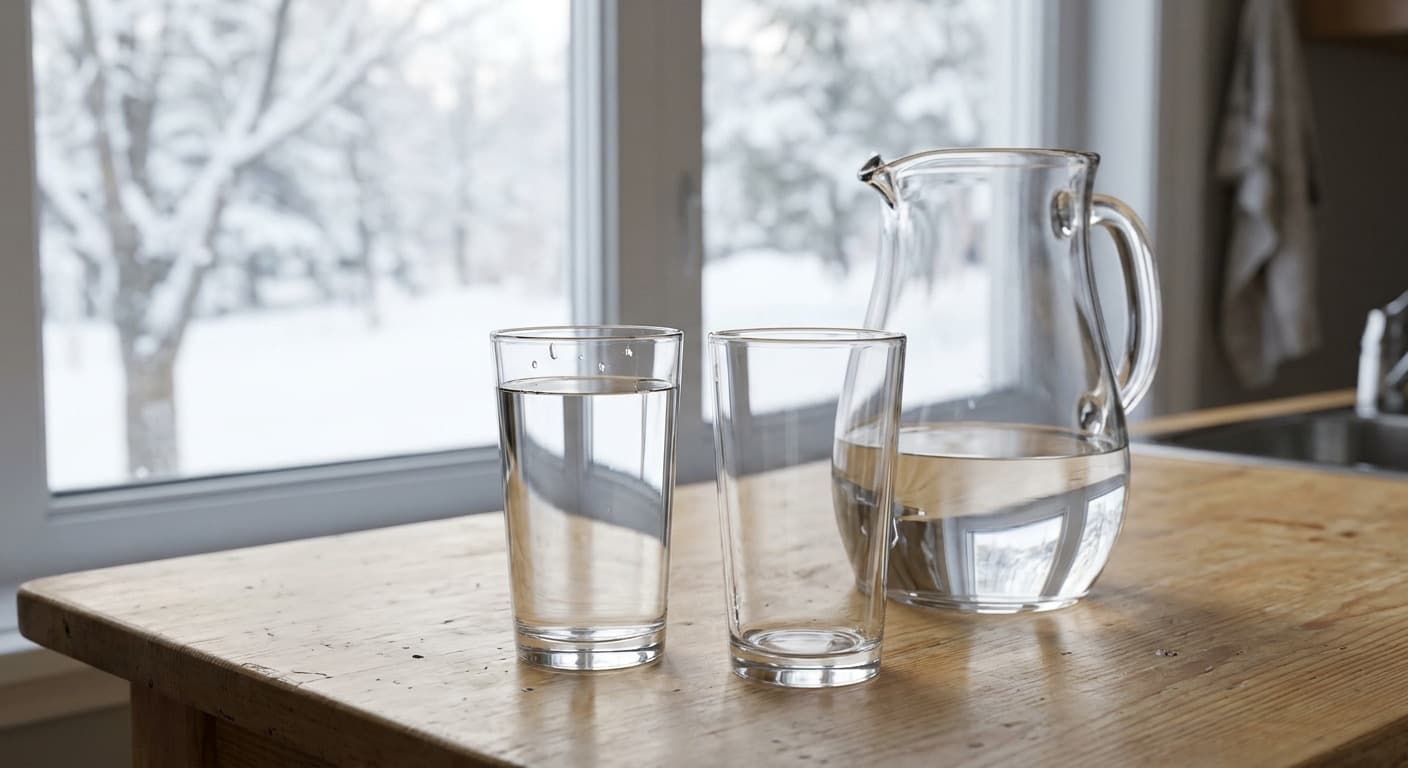
Think of a glass. Every year the tax system gives you one the size of 18% of your salary, and what you save in your RRSP and in your employer's retirement plans has to fit inside it. The idea is that two people with similar incomes get comparable tax-assisted savings, whether or not they have a pension. If you work in the public sector, the RREGOP pours first. What's left at the top is your RRSP room.
How your RRSP room is calculated, and where box 52 comes in
The RRSP formula is the same for everyone. The CRA walks through it line by line in its T4040 guide: you take your earned income from the previous year and multiply it by 18%. If your only income is your job, that's your salary. A second job or rental income also counts. The result has a cap, the annual RRSP dollar limit: $35,390 for 2027 room. The cap only affects people who earn more than about $196,000.
That's the size of the glass. Then comes what's already poured: from that figure you subtract the total of box 52 on your T4s for the same year. That number is the pension adjustment: the value the tax system puts on what your employer plan built up for you that year. The same happens with two company plans we explain in employer plans in Quebec. One is the defined contribution RPP, where what goes in is fixed and the market decides the pension. The other is the DPSP, the share of profits the company sets aside for you.
Room you don't use isn't lost. It carries forward from year to year, and the figure that counts is on your latest notice of assessment, which also appears in your CRA online account.
In AuraPlan, when you enter your job with its pension, the RRSP room for each future year is projected with the pension adjustment already subtracted. That way the plan doesn't count on savings the tax rules won't let you make.
How Retraite Québec measures what the RREGOP already saved for you
In an account, measuring what you saved is easy: it's what you put in. And in a defined benefit pension, which has no balance? The tax system uses a fixed conversion. For every dollar of lifetime pension you earn in a year, it counts $9 of savings, and subtracts $600. That 9 is a tax convention, the same for all defined benefit plans. It measures what's already poured into your glass, not what your pension is worth.
What lifetime pension do you earn in a year in the RREGOP? Each year of service gives you a pension of 2% of your salary, which drops at 65 by 0.7%, calculated only on the part of your salary that doesn't exceed the YMPE. Box 52 counts only what you keep for life: 1.3% of your salary up to the YMPE, and the full 2% on anything above it.
Put that way, it's a lot of rules at once. With Stéphane's year you can see them step by step, applying Retraite Québec's 2026 rules to his $52,000:
- His pension for the year. 2% of $52,000 is $1,040 a year until 65. At 65 it drops by 0.7% of $52,000, or $364. He keeps $676 a year for life.
- His box 52. Nine times $676 is $6,084. Minus $600, that leaves $5,484.
- His glass. 18% of $52,000 is $9,360.
- His new room. $9,360 minus the $5,484 the RREGOP already poured leaves him $3,876 for 2027.
Marie is a high school teacher in Laval, with 32 years of service and a salary of $85,000 in 2026. She earns more than the YMPE, so her reduction at 65 is calculated on the YMPE, not on her salary: 0.7% of $74,600, $522.20. With the same four steps, for a full year of work:
| Stéphane | Marie | |
|---|---|---|
| 2026 salary | $52,000 | $85,000 |
| Pension until 65 (2% of salary) | $1,040.00 | $1,700.00 |
| Reduction at 65 (0.7%, up to the YMPE) | $364.00 | $522.20 |
| Lifetime pension | $676.00 | $1,177.80 |
| Box 52 (9 times the pension, minus $600) | $5,484 | $10,000 |
| RRSP room without a pension (18% of salary) | $9,360 | $15,300 |
| New RRSP room for 2027 | $3,876 | $5,300 |
For both of them, the RREGOP pours more than half the glass, and for Marie, who earns more, an even bigger share.
Retraite Québec writes the same math another way in its 2026 calculation method: 18% of what you earn above an exemption, minus $600. The exemption is 35% of your salary, up to $26,110, which is 35% of the YMPE. For Stéphane, 18% of $33,800 ($52,000 minus an $18,200 exemption) gives $6,084, and minus $600, the same $5,484.
From there comes a rule for any salary: what's left in the glass is $600, plus 18% of that exemption. That works out to 6.3% of your salary (18% times 35%), counted up to the YMPE.
Above the YMPE, a raise no longer gives you more room. Each extra dollar entitles you to 18 cents more of RRSP room, but also to 2 cents more of lifetime pension, which box 52 counts nine times: the same 18 cents. The RREGOP takes up everything the raise gives you. In 2026, on their RREGOP salary, a full-time member with fewer than 35 years of service gets no more than about $5,300 of new room. Other earned income, such as a second job, adds its own 18%.
With the same steps and Retraite Québec's rules, here is how other salaries work out:
| 2026 salary | RRSP room without a pension (18%) | Box 52 | New RRSP room for 2027 |
|---|---|---|---|
| $40,000 | $7,200 | $4,080 | $3,120 |
| $60,000 | $10,800 | $6,420 | $4,380 |
| $74,600 | $13,428 | $8,128 | $5,300 |
| $100,000 | $18,000 | $12,700 | $5,300 |
These are RREGOP figures. Another defined benefit plan goes through the same tax rule with its own pension, and its box 52 comes out differently.
If you work part-time or only part of the year, Retraite Québec prorates everything by credited service, the $600 included. If Stéphane worked half-time all of 2026, he would earn $26,000 and be credited with half a year of service. His glass would be half as big, $4,680, his box 52 too, $2,742, and his new room would be $1,938.
The RREGOP fills your glass before you do. Box 52 only tells you how far.
After 35 years of service, $600 a year remains
The reduction at 65 has a limit: 0.7% per year of service, up to 35 years. From year 36 to year 40, each year of service gives you the full 2% for life, leaving nothing to the QPP. Retraite Québec then applies another formula, with no exemption: 18% of your salary, minus $600.
If Marie keeps working past 35 years of service, the RREGOP will fill her glass to the brim, except for $600. She keeps the room she didn't use in earlier years, but each new year will add only that $600.
By then Marie will be around 63, and the question changes. It's no longer how much she can put into her RRSP, but in what order she'll withdraw what she already has.
What to do with the room you have left
Contribute according to your notice of assessment. If you go over your limit, in 2026 the tax rules let you hold up to $2,000 extra in total, with no penalty, if you're 18 or older. That money stays in the RRSP as an undeducted contribution, and you deduct it in a later year, when you have room.
Any excess above that cushion is subject to a tax of 1% per month for as long as it stays there, until you withdraw it or your new room covers it. You report it on form T1-OVP, within 90 days after the end of the year. A RREGOP member who calculates their room like a worker without a pension can go over without noticing.
The TFSA is your other glass. Box 52 doesn't appear in the TFSA formula: TFSA room depends only on your age and your residence in Canada. If you have the RREGOP, it's the natural place for savings that no longer fit in the RRSP. Which to use first depends on your tax rate today and in retirement, as we explain in TFSA or RRSP.
A buyback of service also fills the glass. If you buy back periods you didn't contribute for, as we explain in the RREGOP article, that past service generates a past service pension adjustment (PSPA). It's subtracted from your RRSP room just like box 52, according to the T4040 guide. Before you apply for a buyback, check how much room you have left.
If you leave the plan before retiring, check your T10. A pension adjustment reversal (PAR) can give back part of the room that box 52 took from you in earlier years. It's added to your limit in the year you receive it.
Stéphane gets the same glass as a neighbour without a pension on the same salary. What changes is who fills it: the RREGOP poured $5,484 for him before he got to the table, in the form of a pension it will pay him for life. The notice of assessment only shows him the top of the glass. The part that matters is already full.
Want a plan that adapts to your life?
AuraPlan is in open beta — take the free assessment and see where your retirement plan stands.