Marital Status and Retirement in Quebec: What Changes
Discover how your marital status (single, married, common-law, divorced or widowed) reshapes your tax and retirement strategy in Quebec.
By Yeny Carias · Co-Founder
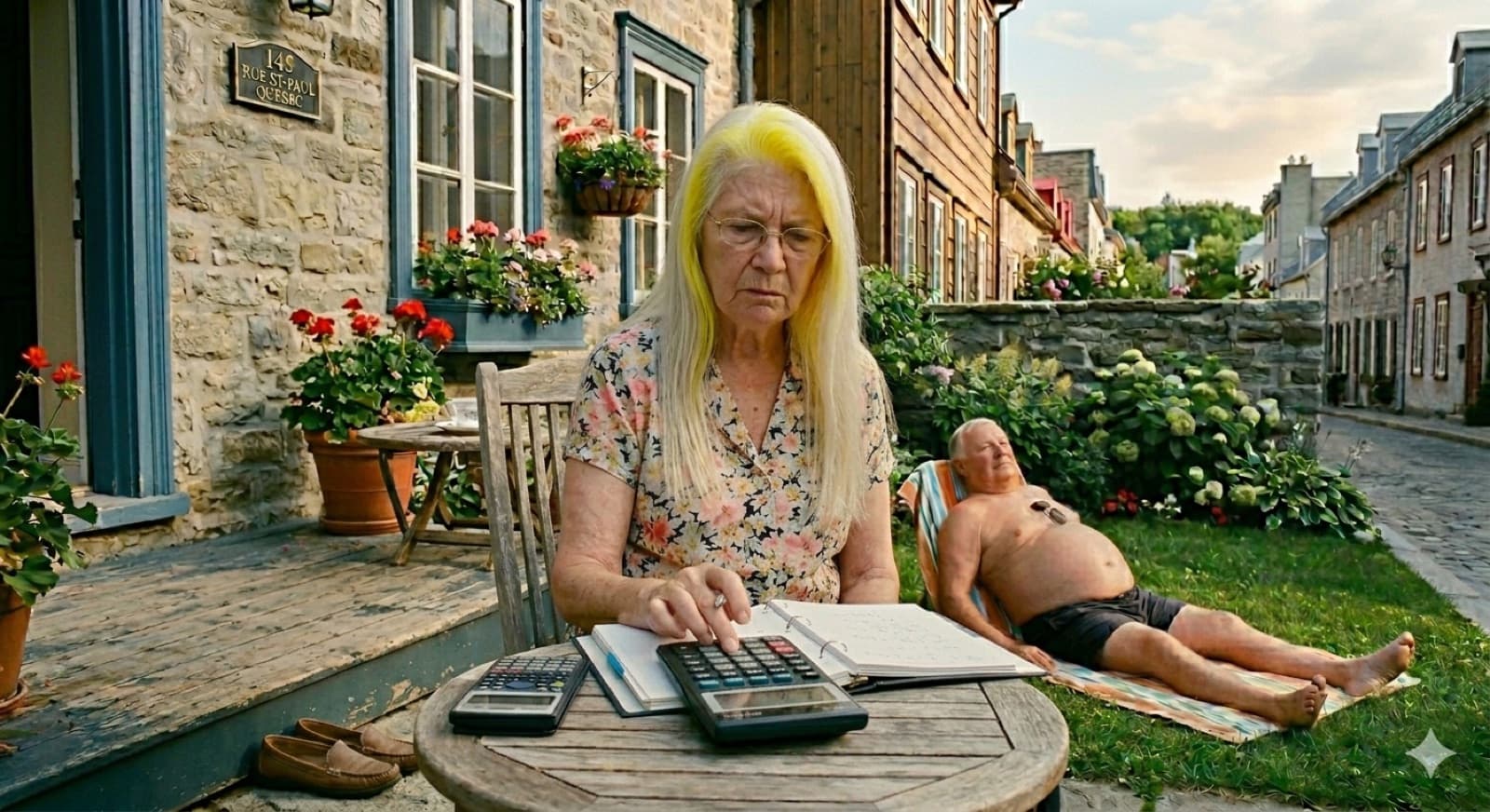
Have you ever wondered how your marital status might change the distribution or the amount of money you will receive in retirement? It is a fascinating topic. Obviously, no one decides to marry or divorce simply to save money on their retirement; the reasons behind these choices are deeply personal and human. However, we cannot ignore that marital status has a massive impact on tax and financial planning.
It is a well-known fact that married couples usually enjoy significant tax advantages in Canada, but there is a major common misconception. These tools do not apply to active employment income; they are unlocked at the moment of retirement. Income splitting (fractionnement du revenu) is an exclusive benefit of retirement. This strategy allows retirees to paper-transfer up to 50% of their eligible pension income to the lower-earning spouse, drastically reducing the household's overall tax bill.
As we discussed in The balance of present and future, a spousal RRSP (REER au profit du conjoint) strategy is ideal when one partner earns significantly more than the other. It allows the higher-earning spouse to contribute to their partner's plan, reducing their current tax burden while balancing the couple's future retirement income.
Preparing for Various Scenarios
As with everything in life, change is the only constant. Your marital status can vary due to countless factors over time, which is why it is vital to understand how the system works so you can be ready for any scenario.
1. Being Single
A single person enjoys absolute flexibility over their budget. This means they have total autonomy over their choices, control over their lifestyle, and the freedom to choose the exact timing of their retirement. There is no need to coordinate financial goals or risk tolerance with a partner.
Additionally, being single offers other unique characteristics:
- Optimization of Subsidies: It simplifies the maximization of certain government subsidies that are based strictly on individual income.
- Absence of Spousal Obligations in Private Pension Plans: In the case of couples, employer pension funds are usually calculated to cover two lifetimes, which can reduce the initial monthly payout. For a single person, since there is no spousal coverage obligation, the initial monthly payout of an annuity or pension is typically higher.
2. Retirement as a Couple (Marriage)
One of the most powerful advantages of planning your retirement as a legally married couple is the ability to reduce your tax burden by working as a team. Tools like the aforementioned pension income splitting (such as with a RRIF) alleviate the household's global marginal tax rate.
On the other hand, marriage offers a solid safety net for public programs and family estate:
- Sharing the QPP: Couples can formally request to split their Quebec Pension Plan retirement pension (Régime de rentes du Québec) to level out their monthly incomes. Only the portion built up during the years spent together is shared.
- Protection Against the OAS Clawback: Distributing income equitably helps avoid exceeding the individual Old Age Security threshold, which penalizes and claws back benefits from high-income earners.
- TFSA Protection: In the event of death, legal marriage status allows the deceased's TFSA (CELI) to be transferred to the survivor as a successor holder (titulaire remplaçant), keeping the capital protected and growing 100% tax-free without consuming the survivor's own contribution room.
3. Retirement as a Couple (De Facto Union / Common-Law)
A de facto union (conjoint de fait or common-law partnership) shares almost the same rights as a marriage in federal programs after 12 months of cohabitation. This includes Old Age Security (OAS), the Guaranteed Income Supplement (GIS), and priority in private corporate pension plans.
Quebec counts the years differently. The QPP survivor's pension requires three years of living together, or just one if a child was born or is to be born of your union.
⚠️ The Big Exception in Quebec: the Civil Code does not grant the same inheritance or property rights to de facto couples (conjoints de fait), regardless of how many years they have lived together. On this point, Quebec parts ways with the rest of Canada. Common-law partners have no right to the automatic division of family patrimony or to legal inheritance if there is no signed will.
One recent nuance matters. Since 30 June 2025, the parental union regime does create a patrimony that gets shared, but only for de facto couples with a child born or adopted from that date onward. For retirement it changes little: pensions, RRSPs and QPP contributions stay outside that patrimony.
4. Separation and Divorce
When a married couple separates or divorces in Canada, the assets accumulated during the marriage, including retirement savings, are considered family patrimony and must be divided.
- Partition of QPP Credits: In Quebec, the employment earnings recorded under the Quebec Pension Plan during the years spent together are split equally. This ensures that a partner who may have interrupted their career or earned less during the relationship is not left unprotected.
- Private Accounts (RRSP, TFSA, and Pensions): These funds can be transferred directly from one spouse's account to the other without tax penalties, provided there is a court order or an official separation agreement stipulating the transfer.
5. Widowhood
The loss of a partner has a profound emotional and financial impact. From a financial perspective, the Canadian system features highly specific protection mechanisms.
To go deeper, read What would happen to your retirement in the face of an unexpected goodbye?. It covers what happens to retirement when one partner is gone and how the rules apply in Quebec.
If the death occurs while already receiving an employer pension, the law generally requires having chosen a joint and survivor pension option. The survivor then continues to receive a percentage of that income, for example between 60% and 100%. Regarding public pensions, the QPP survivor's pension is triggered immediately, and for low-income individuals aged 60 to 64, the federal Allowance for the Survivor becomes available.
- Watch Out for the Combined Pension Rule: A common retirement planning mistake is overlooking Retraite Québec's rules when receiving a survivor's pension. If you draw the survivor's pension and your own QPP retirement pension at the same time, both are paid together as a "combined pension." The law sets a maximum that is not necessarily the sum of the two, so your survivor's pension can be reduced. And if by 65 you are already receiving the maximum retirement pension under the base plan, that portion of the survivor's pension drops to zero. Plan for it before it happens, not after.
- What Happens to Savings if Death Occurs Before Retirement? If a partner passes away unexpectedly just before retiring, their private savings (such as RRSPs and TFSAs) are not lost or evaporated. Thanks to a tax mechanism known as a tax-deferred rollover (roulement fiscal), these funds can be transferred directly to the surviving spouse. This prevents the accounts from being fully liquidated and hit with a massive tax bill all at once, preserving the capital intact for the survivor's future.
As we explained in how to draw down your RRSP after 71, there is no "inheritance tax" per se in Canada. But the government will tax-liquidate the deceased's registered accounts before the money reaches the beneficiaries, unless they are transferred to a spouse. The final bill will always fall upon the estate or succession.
Marital status changes the rules of the game, but knowledge puts you back in control.
Want a plan that adapts to your life?
AuraPlan is in open beta — take the free assessment and see where your retirement plan stands.